Top SEO Services Every High-Performance Website Needs in 2026
Reading time: 14 minutes
Ever feel like you’re playing a game where the rules change every six months? Welcome to SEO in 2026. Search engines have evolved from simple keyword-matching machines into sophisticated AI-driven systems that evaluate your website across hundreds of nuanced signals. The sites winning top spots today aren’t just stuffing keywords — they’re delivering exceptional, holistic digital experiences.
Here’s the straight talk: if your website’s SEO strategy still looks the same as it did in 2023, you’re already three steps behind. But the good news? The core principles of helping people find what they need are timeless. It’s the execution that needs a serious upgrade.
This guide walks you through the essential SEO services that high-performance websites can’t afford to skip in 2026 — with real examples, hard data, and practical steps you can act on immediately.
Table of Contents
- Why SEO Still Matters More Than Ever in 2026
- Technical SEO: The Foundation No One Sees
- Content Intelligence Services
- Link Building and Digital Authority Development
- Local SEO and Geo-Targeting Services
- AI-Powered SEO and Search Generative Experience Optimization
- Analytics, Reporting, and Continuous Optimization
- SEO Services Comparison: What’s Worth Your Budget
- Frequently Asked Questions
- Your 2026 SEO Action Plan
Why SEO Still Matters More Than Ever in 2026
Some marketers predicted that AI chat interfaces would make traditional search engines — and by extension, SEO — obsolete. That prediction aged poorly. According to a 2026 BrightEdge Digital Research Report, organic search still drives 53.3% of all trackable website traffic, with paid channels accounting for just 15%. Even with AI-generated answer panels integrated directly into Google and Bing results pages, users still click through to source websites — especially for complex, high-intent queries.
What has changed dramatically is the nature of search itself. In 2025, Google fully rolled out its Search Generative Experience (SGE) globally, reshaping how content appears in SERPs. By early 2026, roughly 68% of informational queries now trigger an AI overview panel before organic listings. This means your SEO strategy must account for being cited inside AI answers, not just ranking below them.
Think about it this way: imagine you own a boutique interior design firm in Chicago. Two years ago, ranking #2 for “modern living room ideas” was golden. Today, the AI panel answers that query with a curated response — and if your site is the cited source, you earn both traffic and brand authority. If you’re not, you’re invisible to a huge portion of searchers.
The bottom line: SEO isn’t dying. It’s evolving into something far more comprehensive, technical, and strategic — which is exactly why investing in the right services has never been more critical.
Technical SEO: The Foundation No One Sees
Technical SEO is the backbone of every high-performing website. It’s the infrastructure work — unglamorous but absolutely essential. Think of it as the electrical wiring of a building: no one admires it, but without it, nothing works.
Core Web Vitals and Page Experience Signals
Google’s Core Web Vitals — Largest Contentful Paint (LCP), Interaction to Next Paint (INP), and Cumulative Layout Shift (CLS) — are now firmly established ranking factors. But in 2026, Google has added a fourth metric to its Page Experience signals: Smooth Navigation Score (SNS), which measures perceived transition fluency between pages, particularly on Single Page Applications (SPAs).
Here’s a real-world scenario that illustrates the stakes: In Q3 2025, an e-commerce brand called Verdant Home (a mid-sized sustainable furniture retailer) saw its organic traffic drop 31% after a site redesign introduced layout shift issues (CLS score jumped from 0.05 to 0.42). After six weeks of technical remediation — including image dimension fixes, font preloading, and eliminating third-party script conflicts — traffic recovered and actually grew 18% above pre-redesign levels. The lesson: technical performance isn’t optional; it’s the price of admission.
Key technical SEO services to prioritize in 2026:
- Comprehensive site crawl audits using tools like Screaming Frog, Sitebulb, or Ahrefs Site Audit
- Core Web Vitals monitoring and remediation (targeting LCP under 2.5s, INP under 200ms, CLS under 0.1)
- Structured data implementation (Schema.org markup for articles, products, FAQs, local businesses)
- XML sitemap and robots.txt optimization
- Mobile-first indexing compliance verification
- HTTPS and security protocol auditing
- International SEO (hreflang implementation for multi-language sites)
Site Architecture and Crawl Budget Management
As websites grow in complexity — especially enterprise-level e-commerce platforms with hundreds of thousands of pages — crawl budget becomes a strategic concern. Search engine bots have finite resources to crawl your site. Wasting crawl budget on orphaned pages, duplicate content, or parameter-heavy URLs means your most important pages get crawled less frequently.
A well-structured site architecture uses logical URL hierarchies, internal linking strategies, and canonical tags to guide bots (and users) toward your highest-value content. In 2026, JavaScript-heavy frameworks like Next.js and Nuxt.js dominate web development — and while server-side rendering has improved SEO compatibility, ensuring your JavaScript-rendered content is fully indexable remains a specialized technical service that many agencies still handle poorly.
Pro Tip: Run a Google Search Console coverage report monthly. Any significant spike in “Discovered – currently not indexed” pages is a red flag for crawl budget inefficiency or content quality issues that need immediate investigation.
Content Intelligence Services
Content marketing and SEO have always been partners, but in 2026, the relationship has become even more intertwined — and more demanding. Publishing blog posts isn’t enough. High-performance websites need a content intelligence approach: data-driven decisions about what to create, how to structure it, and how to keep it performing over time.
Topic Cluster Strategy and Semantic SEO
Semantic SEO — optimizing for the meaning and contextual relationships between topics, not just individual keywords — is the dominant content framework of 2026. Search engines now understand entities, relationships, and user intent with remarkable precision. Google’s Knowledge Graph and BERT-based systems evaluate how comprehensively your site covers a subject area.
The topic cluster model organizes your content into interconnected hubs: one comprehensive “pillar page” covering a broad topic, supported by multiple “cluster pages” addressing specific subtopics and linking back to the pillar. This structure signals topical authority to search engines while creating a logical navigation experience for users.
Consider the example of Apex Financial Planning, a boutique advisory firm that implemented a topic cluster strategy in early 2025. They built a pillar page on “Retirement Planning in Your 50s” supported by 14 cluster pages covering subtopics like Roth IRA conversions, Social Security optimization, and healthcare cost planning. Within eight months, the pillar page ranked in positions 1–3 for 23 high-intent keywords, and the firm saw a 67% increase in qualified consultation requests from organic search.
Content intelligence services include:
- Keyword research and opportunity gap analysis
- Competitor content auditing and benchmarking
- Topic cluster mapping and pillar page creation
- Content refresh and historical optimization programs
- E-E-A-T (Experience, Expertise, Authoritativeness, Trustworthiness) enhancement strategies
- AI-assisted content drafting with human editorial oversight
- Content performance tracking and ROI attribution
E-E-A-T Optimization: The Trust Factor
Google’s Search Quality Evaluator Guidelines place enormous weight on E-E-A-T signals — especially for YMYL (Your Money or Your Life) topics like health, finance, and legal advice. In 2026, demonstrating genuine first-hand experience (the first “E” added in 2022) has become a significant differentiator.
This means your content strategy should actively incorporate author credentials, original research, case studies from real client work, and transparent sourcing. Anonymous or thinly-attributed content, regardless of how well it targets keywords, consistently underperforms in competitive niches. Building author profile pages, earning media mentions, and getting cited in industry publications all contribute to E-E-A-T signals that no algorithm update can take away.
Link Building and Digital Authority Development
Backlinks remain one of the most powerful ranking signals in 2026 — but the quality threshold has risen dramatically. Google’s link spam systems, now powered by advanced machine learning, are exceptionally effective at identifying and devaluing manipulative link schemes. Buying bulk links from private blog networks (PBNs) or link farms isn’t just ineffective; it’s a liability that can trigger manual penalties.
What works in 2026 is earning links through genuine value creation and strategic relationship-building:
- Digital PR campaigns: Creating newsworthy studies, data reports, or expert commentary that journalists and bloggers naturally reference
- Original research and surveys: Publishing proprietary data that others cite — these generate some of the highest-authority backlinks
- Expert contribution networks: Contributing genuine expertise to industry publications, podcasts, and collaborative content
- Broken link building: Identifying dead links on authoritative sites and suggesting your content as a replacement
- Skyscraper technique: Creating definitively better versions of content that already attracts links, then outreaching to those linkers
- Partnership and resource page outreach: Building relationships with complementary brands for mutual linking opportunities
According to Ahrefs’ 2026 State of Link Building Report, the average top-ranking page for a competitive keyword now has 3.8x more referring domains than pages ranking positions 4–10. Domain authority matters, but topical relevance of linking sites has become an increasingly important quality signal. A single link from a highly relevant, mid-authority site in your industry often outperforms ten links from generic high-DA sites.
Local SEO and Geo-Targeting Services
For businesses with physical locations or service areas, local SEO is one of the highest-ROI investments available. “Near me” searches have grown 350% over the past four years, and with mobile and voice search dominating how people find local services, showing up in the Local Pack (the map-based results block) can mean the difference between a fully booked business and an empty calendar.
Core local SEO services in 2026:
- Google Business Profile (GBP) optimization and management
- NAP (Name, Address, Phone) consistency across 50+ directories
- Review generation and reputation management strategies
- Local keyword research and geo-targeted content creation
- Local link building from community organizations, local press, and business associations
- Multi-location SEO for franchise or chain businesses
- Voice search optimization for conversational local queries
A compelling example: Sunrise Dental Group, a regional dental chain with 12 locations across the Pacific Northwest, invested in a structured local SEO program throughout 2025. By fully optimizing each location’s Google Business Profile with updated service categories, high-quality photos, and a systematic review solicitation process, they increased Local Pack appearances by 84% and new patient bookings from organic search by 52% within nine months — without any increase in paid advertising spend.
AI-Powered SEO and Search Generative Experience Optimization
This is the newest and most rapidly evolving frontier of SEO services. With Google’s AI Overviews and Microsoft Copilot search integration now standard features, optimizing for visibility within AI-generated responses has become its own specialized discipline.
Being cited in an AI Overview typically requires your content to be:
- Highly authoritative and well-sourced (strong E-E-A-T signals)
- Structured with clear, concise answers to specific questions (FAQ schema, definition-style formatting)
- Comprehensive enough to cover the topic in depth, but organized so key points are easily extractable
- Published on technically sound, fast-loading, mobile-optimized pages
- Backed by a strong backlink profile from relevant, trustworthy sources
AI SEO services also encompass using AI tools in your workflow: using language models for content ideation, competitive gap analysis, automated rank tracking, predictive keyword opportunity scoring, and large-scale content auditing that would be impossibly time-consuming manually.
Expert perspective: Lily Ray, Senior Director of SEO & Research at Amsive, noted in a 2025 industry keynote: “The sites winning in AI-driven search aren’t gaming the system — they’re genuinely the best answers to user questions. The algorithms have gotten good enough to tell the difference.” That insight rings truer than ever heading into 2026.
Analytics, Reporting, and Continuous Optimization
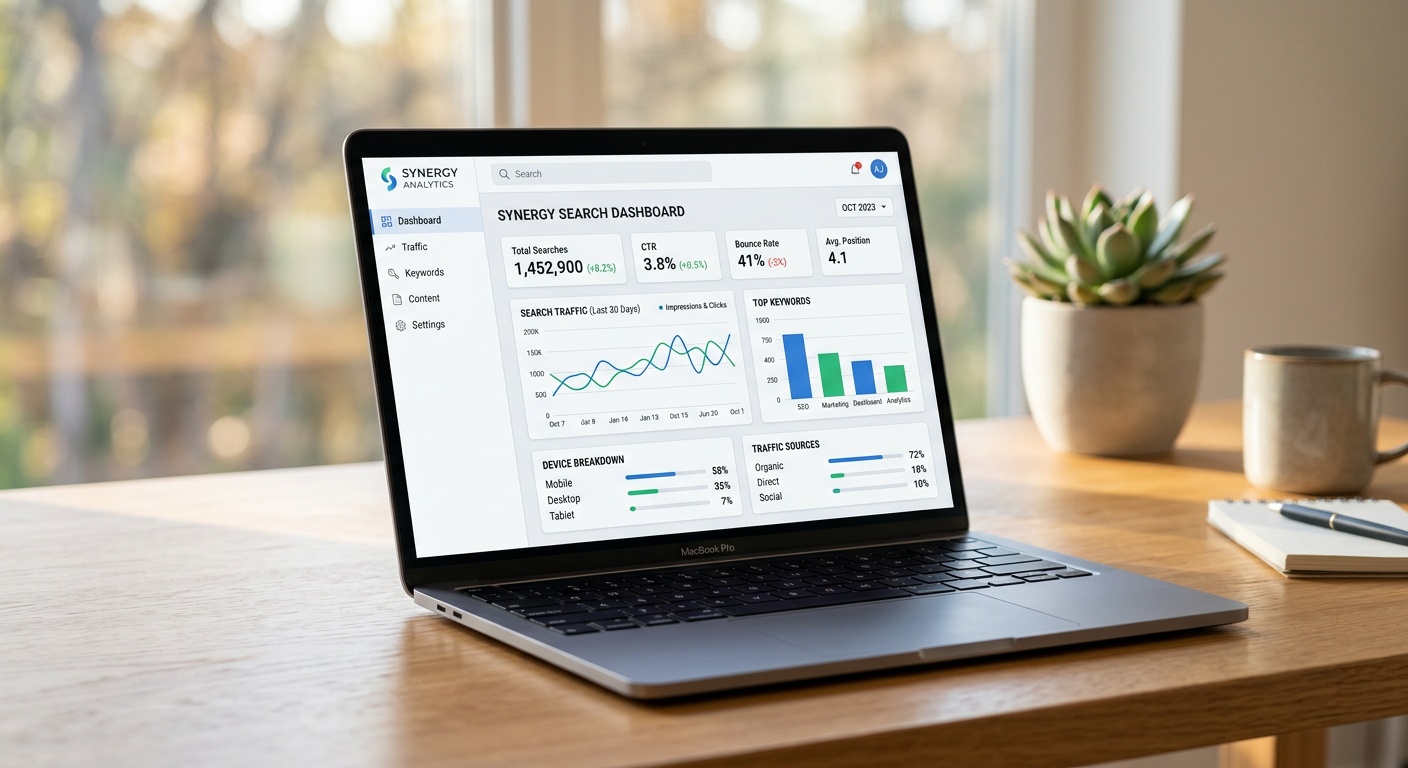
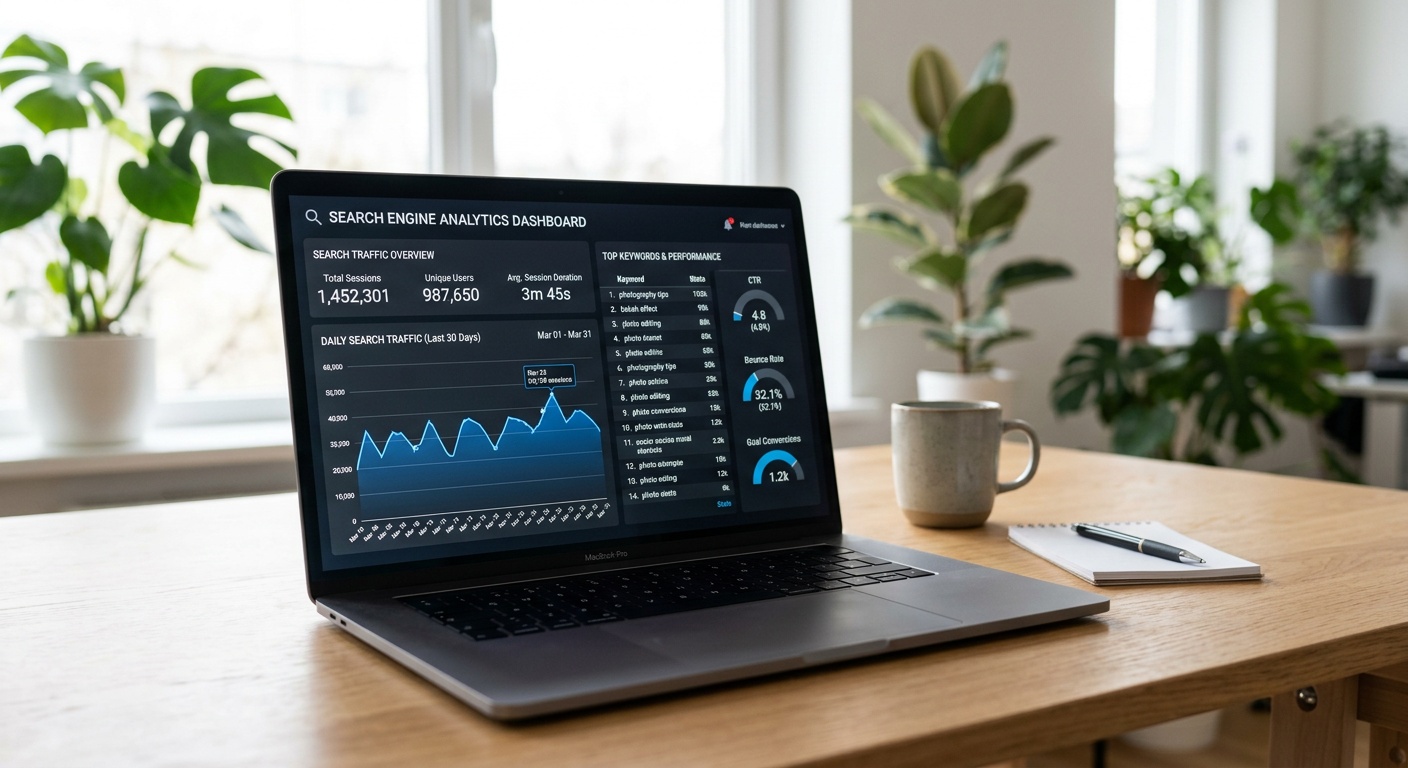
SEO without measurement is just guessing. High-performance websites treat analytics as a continuous feedback loop, not a monthly report card. The shift to GA4 (Google Analytics 4), which became mandatory in 2023, has matured into a powerful event-based analytics platform — but many businesses still aren’t leveraging its full capabilities.
In 2026, best-in-class SEO analytics programs include:
- Custom GA4 dashboards tracking organic conversions, assisted conversions, and revenue attribution from SEO
- Google Search Console integration for click-through rate analysis, impression share, and index coverage monitoring
- Rank tracking across target keywords, segmented by device, location, and SERP feature type
- Competitor monitoring to track share-of-voice and identify emerging threats or opportunities
- Link profile monitoring to catch toxic backlink acquisition and track new link opportunities
- Quarterly SEO audits to adapt strategy to algorithm updates and performance data
The most successful SEO programs run on a test-measure-iterate cycle. Hypothesis: changing our meta description for this product category will improve CTR. Test: update 20 page titles with power words and action verbs. Measure: compare 30-day CTR data in Search Console. Iterate: roll out winning formulas site-wide. This scientific approach compounds over time into significant performance gains.
SEO Services Comparison: What’s Worth Your Budget
| SEO Service | Impact Level | Time to Results | Avg. Monthly Investment | Best For |
|---|---|---|---|---|
| Technical SEO Audit & Fixes | ⭐⭐⭐⭐⭐ Critical | 4–8 weeks | $1,500–$5,000 | All websites |
| Content Strategy & Creation | ⭐⭐⭐⭐⭐ Critical | 3–6 months | $2,000–$10,000 | Brands building authority |
| Link Building & Digital PR | ⭐⭐⭐⭐ High | 4–9 months | $2,500–$8,000 | Competitive niches |
| Local SEO Management | ⭐⭐⭐⭐ High | 2–4 months | $500–$2,500 | Local/service businesses |
| AI Search Optimization (SGE) | ⭐⭐⭐⭐ Emerging High | 3–6 months | $1,000–$4,000 | Content-heavy sites |
SEO Investment ROI: Organic Traffic Growth by Service Type
Average organic traffic improvement after 6 months of consistent implementation (2025–2026 industry data)
Note: SGE optimization shows lower traffic gains currently but delivers disproportionate brand visibility and citation authority benefits not fully captured in traffic metrics alone.
Frequently Asked Questions
How long does it take to see results from SEO services in 2026?
The honest answer: it depends on your starting point, competition level, and which services you’re investing in. Technical fixes on a site with serious performance issues can show meaningful results in 4–8 weeks. Content strategies and link building campaigns typically require 3–6 months to demonstrate significant organic traffic growth. Newer sites in competitive markets should budget 9–12 months for substantial results. The good news is that SEO results compound over time — unlike paid advertising, which stops the moment your budget does. Setting realistic expectations from the start is the hallmark of any reputable SEO provider.
Should I handle SEO in-house or hire an external agency?
Both models can work — it comes down to your team’s expertise, bandwidth, and budget. In-house SEO teams have deep brand knowledge and can move quickly on content, but often lack the specialized technical depth or link-building networks that agencies bring. Many high-performance websites in 2026 use a hybrid model: an in-house SEO manager or team handles day-to-day execution and content, while a specialized agency provides technical auditing, link acquisition, and strategic guidance. The key is ensuring whoever leads your SEO has current knowledge of 2026’s ranking landscape — the field moves too fast for outdated playbooks to succeed.
Is SEO still effective given the rise of AI search and zero-click results?
Absolutely — but you need to reframe how you measure success. Zero-click results and AI Overviews do reduce some click-through rates for simple informational queries. However, they increase brand exposure significantly for sites cited as sources, and they have minimal impact on transactional, commercial, or complex research queries — which tend to be the highest-value traffic anyway. Businesses that adapt their content strategy to earn AI citations, while doubling down on building genuine topical authority, are finding that organic search remains one of their most cost-efficient acquisition channels in 2026. The key insight: optimize to be the answer, not just rank near the answer.
Your 2026 SEO Action Plan: Building a Search Engine You Can’t Ignore
We’ve covered a lot of ground. Let’s distill it into a clear, prioritized roadmap you can start executing this week — whether you’re a solopreneur managing your own site or a marketing director overseeing an enterprise platform.
Step 1 — Audit Before You Act. Commission or run a comprehensive technical SEO audit before investing heavily in content or links. You could be creating brilliant content that search engines can’t properly crawl or index. Fix the foundation first. Tools like Screaming Frog (free up to 500 URLs) give you a solid starting point.
Step 2 — Define Your Topical Authority Territory. Pick 3–5 core topic clusters where you want to own the conversation. Map out your pillar pages and supporting cluster content. Prioritize depth over breadth — being comprehensively authoritative on fewer topics outperforms thin coverage of many.
Step 3 — Build Links That Actually Matter. Develop one original data-driven asset — a survey, a proprietary report, a unique industry analysis — and use it as the engine for a digital PR link acquisition campaign. One well-executed campaign can generate 20–50 high-quality editorial backlinks.
Step 4 — Optimize for AI Citation. Review your top 10 existing pages and restructure them with clear question-answer formatting, rich FAQ schema markup, and concise expert summaries at the top. These elements dramatically increase the likelihood of being cited in AI Overview panels.
Step 5 — Measure What Matters. Set up a monthly SEO scorecard tracking: organic sessions, keyword ranking distribution (positions 1–3, 4–10, 11–20), conversion rate from organic traffic, Core Web Vitals scores, and referring domain growth. Review it consistently and let data drive your next moves.
Key Takeaways:
• Technical SEO is non-negotiable — no strategy succeeds on a broken foundation
• Topical authority through content clusters is the dominant content model of 2026
• Quality backlinks from relevant, authoritative sources still dramatically move rankings
• AI Search optimization is the emerging frontier — early movers gain significant advantages
• Measurement and iteration compound your results over time — consistency beats perfection
The brands and websites that will dominate search in 2026 and beyond aren’t those chasing every algorithm update in a panic. They’re the ones methodically building genuine authority — creating content so useful, sites so technically excellent, and reputations so trustworthy that search engines can’t help but surface them first.
Here’s the question worth sitting with: If every ranking algorithm disappeared tomorrow and search engines could only surface the sites that genuinely deserved to be found — would yours make the cut? Building toward an honest “yes” to that question is the most durable SEO strategy you’ll ever implement.
As search continues to integrate AI, personalization, and multimodal inputs (voice, image, video), the websites that invest in comprehensive SEO services today are building an asset that appreciates in value for years. Your competitors are making decisions right now. What’s yours going to be?
About the Author
